
The way an MVNO chooses to bill its subscribers can make or break its business. Prepaid and postpaid models may sound like simple billing options, but the differences between them go far deeper — influencing everything from cash flow and customer acquisition to churn and long-term profitability.
If you’re launching or scaling your MVNO, choosing the right billing model is one of the most strategic decisions you’ll make.
The Two Models Explained
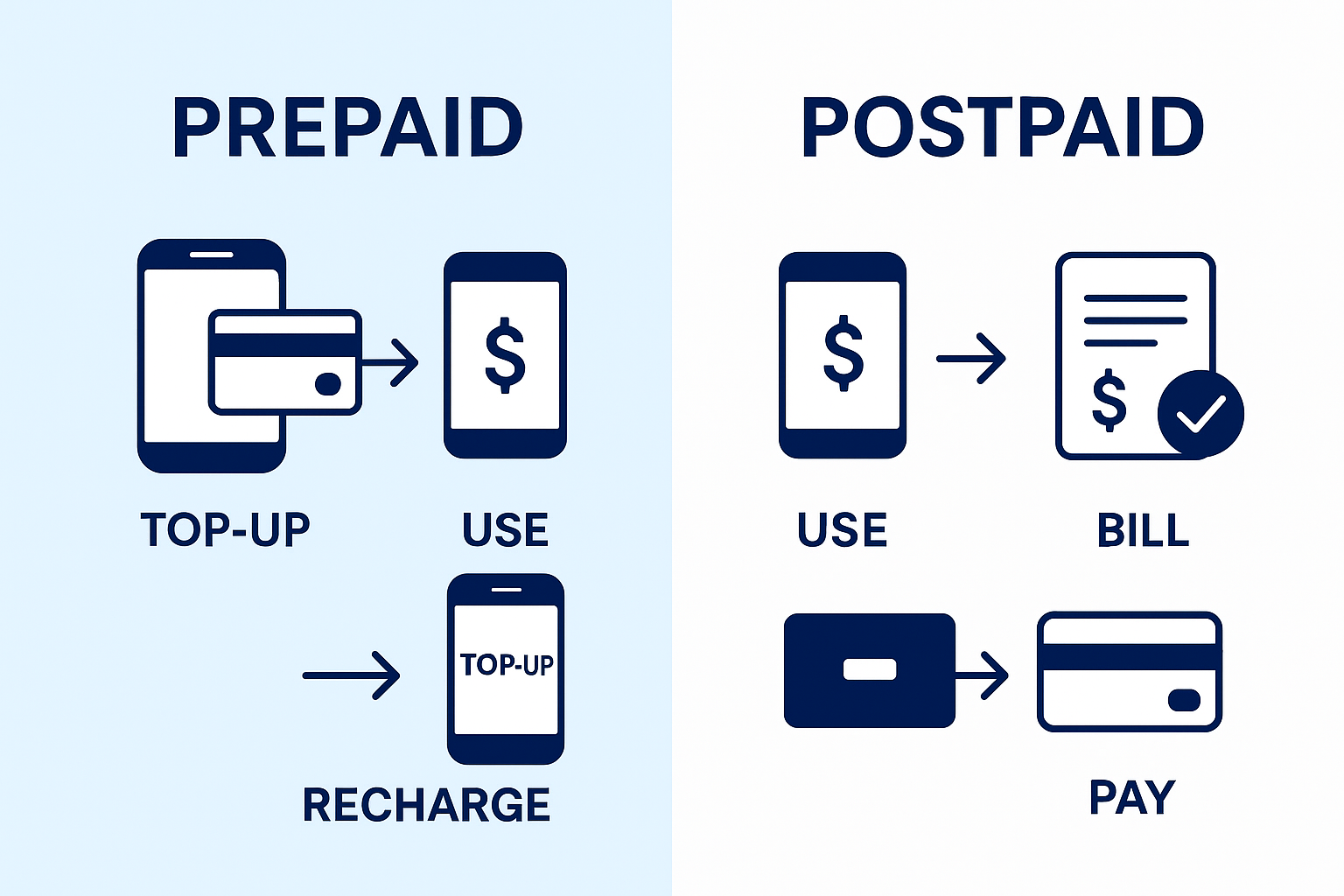
Prepaid billing is straightforward: customers pay upfront for a bundle or balance of services — voice, data and video. Usage is limited to what’s been paid for, and once that balance is exhausted, access is cut off until a top-up is made.
Postpaid billing, on the other hand, allows customers to use services throughout the month and pay after usage. These customers typically receive a detailed invoice at the end of a billing cycle.
Both models are widely used across MVNOs globally — and each comes with its own set of trade-offs.
What Are the Pros and Cons?
Let’s break it down:
Prepaid:
Pros
Eliminates credit risk
Delivers immediate revenue
Simple to launch and scale
Attractive for price-sensitive markets
Cons
Harder to predict revenue over time
Limited ability to upsell or cross-sell
Higher churn rates in some markets
Customers may require frequent re-engagement
Postpaid:
Pros
Better long-term customer value
Easier to bundle and upsell services
Stronger customer loyalty in many cases
Ideal for premium and enterprise users
Cons
Requires credit risk management
More complex billing and collections
Revenue is delayed
Greater reliance on backend infrastructure
Why the Choice Isn’t Always Obvious
Many MVNOs default to prepaid because it’s easier to launch and simpler to manage — especially for startups or brands new to telecom. But this choice often comes at a long-term cost.
Postpaid, while operationally more complex, unlocks better customer relationships and predictable revenue. However, if the MVNO’s billing platform isn’t built to handle it efficiently, the operational burden can outweigh the benefits.
The Rise of Hybrid Billing Models
A growing number of MVNOs are now blending both approaches.
Hybrid billing allows operators to offer prepaid access to services like voice and data, while layering in postpaid elements such as monthly add-ons, overages, or loyalty subscriptions. This flexibility caters to evolving customer expectations — especially in markets where digital-first consumers demand more personalised plans.
But executing this well requires a billing system that can support:
Real-time charging for prepaid usage
Automated invoicing for postpaid components
Seamless transitions between models
What to Consider Before You Decide
Here’s what every MVNO should evaluate:
Customer profile: Are your users price-sensitive, high-usage, or enterprise clients?
Market norms: Is your geography prepaid- or postpaid-dominant?
Cash flow needs: Can your business support delayed payments?
Operational readiness: Do you have the tools for collections, dunning, and fraud prevention?
Flexibility: Can your billing platform support future transitions between models?
How CRM.COM Helps You Get It Right
CRM.COM enables MVNOs to launch with prepaid, postpaid or hybrid billing models — without compromise.
Our powerful billing engine supports:
Real-time prepaid balance management
Automated postpaid invoicing and collections
Seamless customer transitions between plans
Usage-based rating and flexible charging rules
Whether you’re launching your MVNO or scaling to new markets, we help you monetise your services more effectively — without locking you into a rigid billing structure.
Final Thoughts
There’s no universal right answer — only the model that best aligns with your strategy.
Prepaid gives you speed. Postpaid gives you stickiness. And a flexible hybrid model gives you both — if your billing system is built to handle it.
If you’re unsure whether your current platform is up to the challenge, or want to learn how to optimise your billing for growth, we’d love to talk.

B2B SaaS Sales & Product Marketing nerd by day, growth whisperer by night.
Here for the retention, not the churn.


